Registry vs. marketplace
A registry tells AI yes. PPL is what happens next.
In June 2026, RSL Media launched the Human Consent Registry — a free, open way for anyone to declare whether AI may use their name, image, likeness, or voice. It's good, necessary infrastructure, and it validates exactly the problem PPL exists to solve. This page is about the one distinction that matters: they're building the registry. We're building the marketplace behind it.
 Consent · declared
License · PPL · scoped · renewable
The registry
What RSL Media got right
Launched at the European Parliament with MEP Eva Maydell, backed by Cate Blanchett, Steven Soderbergh, and CAA, the Human Consent Registry gives anyone a free Human Consent ID: a traffic-light declaration — Prohibited, Permitted with Terms, Permitted — across name, image, likeness, voice, and movement, encoded into a machine-readable signal AI systems can check. It's an open standard, not a walled garden, and it targets the exact inequity that matters: paid clearance services that price out everyone but the A-list.
"…otherwise you're going to create a tiered system in which some people have access to these rights and protections, and the people that can't pay don't." — Steven Soderbergh, RSL Media supporter · Variety, 29 Jun 2026
"Consent is a human right." … "A person should be able to say: this is me, this is what I allow, this is what I do not allow, and this is the safe way to reach me if you need to ask." — Nikki Hexum, co-founder & CEO, RSL Media · RSL Media launch release, 12 May 2026; registry launch release, 23 Jun 2026
The handoff
A registry ends at frame one. PPL delivers the other three.
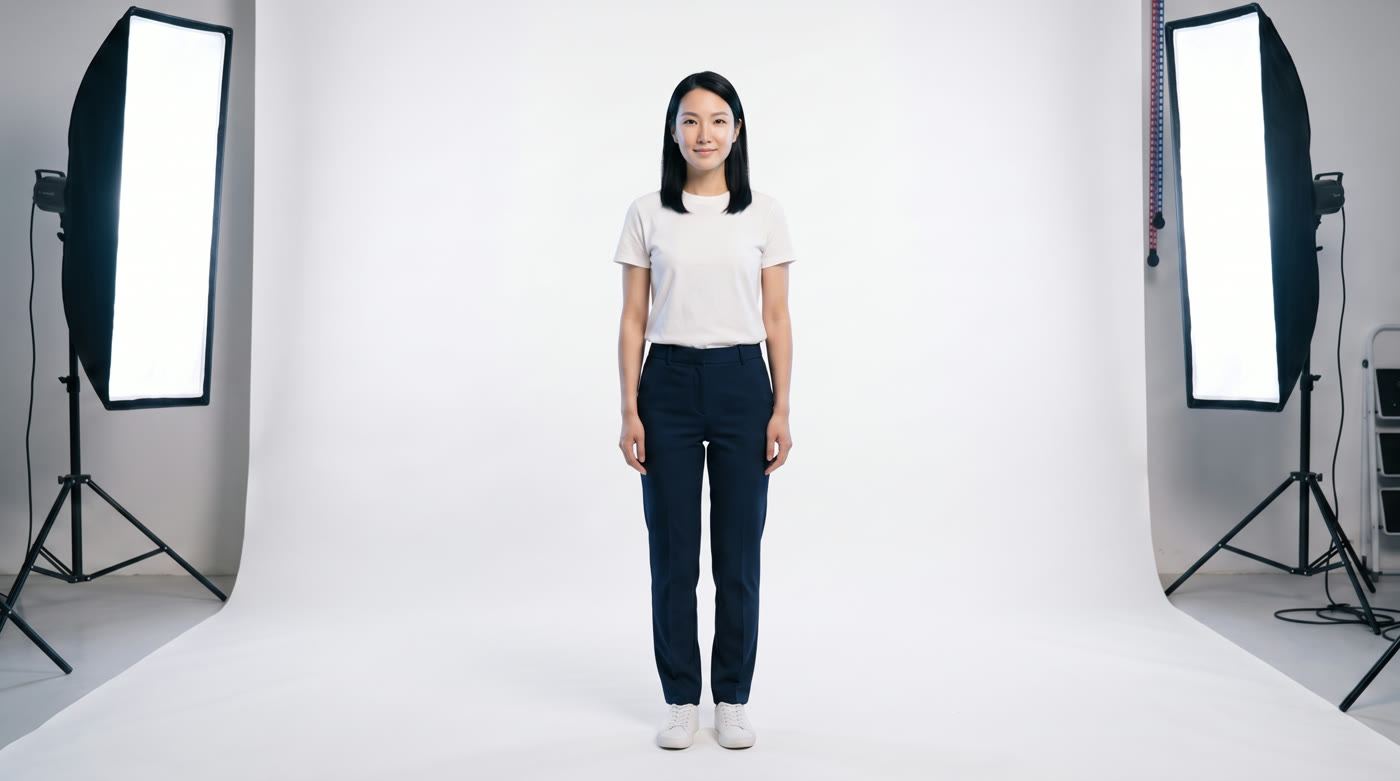
Same woman, one consent chain. The declaration is where her control starts — the license, the studio work, and the labeled campaign frame are where it becomes real, paid, and defensible.

01 · RegistryDeclared

02 · LicenseScoped · paid

03 · StudioIn scope

04 · DeliveredRights-cleared
The difference
One answers may I. The other delivers the campaign.
A green light in a registry is a declaration, not a deal. It doesn't find a brand, negotiate a rate, verify the person, or pay anyone. PPL starts exactly where that declaration leaves off.
| A consent registry | PPL | |
|---|---|---|
| Core object | A declaration — red / yellow / green per attribute | A license — scoped, time-boxed, renewable, tied to specific people and uses |
| Who it serves | People, unilaterally, and AI crawlers reading the signal | Both sides — verified people and brands, matched to each other |
| Discovery | None — brands still have to find and approach people themselves | Built in — brands source consented people directly on the platform |
| Compensation | Not addressed | Core to the product — every license has terms, a rate, and renewal |
| Verification | Self-attested identity — a name and a few links | Verified likeness — the biocode mark, tied to the licensed work itself |
| Enforcement | Voluntary compliance, no audit trail | An auditable record — who consented, to what, for how long |
| Production path | None | Brief → source consented people → licensed, labeled, finished campaign work |
In practice
What a "yes" turns into on PPL
Verified, not just declared
A person's biocode mark ties their consent to the actual likeness a brand will use — not just a name on a form.

Scoped and renewable
Never a perpetual buyout. Every license has a defined use and a term, and nothing expires without notice.

A finished campaign, not a green light
Brands brief, source, and receive labeled, rights-cleared assets — the compliance work is done before delivery, not after.
The registry opens the door. PPL is what's behind it.
We hope every consent registry succeeds — the more people who can say yes, no, or yes with terms, the better this industry gets. Our job starts the moment that answer needs to become real, paid, compliant work.